Quick answer
In the second quarter of 2026 the average asking rent for a one-bedroom apartment was $2,280 in Vancouver, $2,090 in Toronto, $1,550 in Calgary, $1,480 in Montréal and $1,260 in Edmonton. The average across Canada's metro areas was $1,730, down 2.8% from a year earlier.
On a C$60,000 salary, a one-bedroom takes about 57% of take-home pay in Vancouver and 53% in Toronto, against 32% in Edmonton and 35% in Winnipeg.
Average rent in 41 Canadian cities, Q2 2026
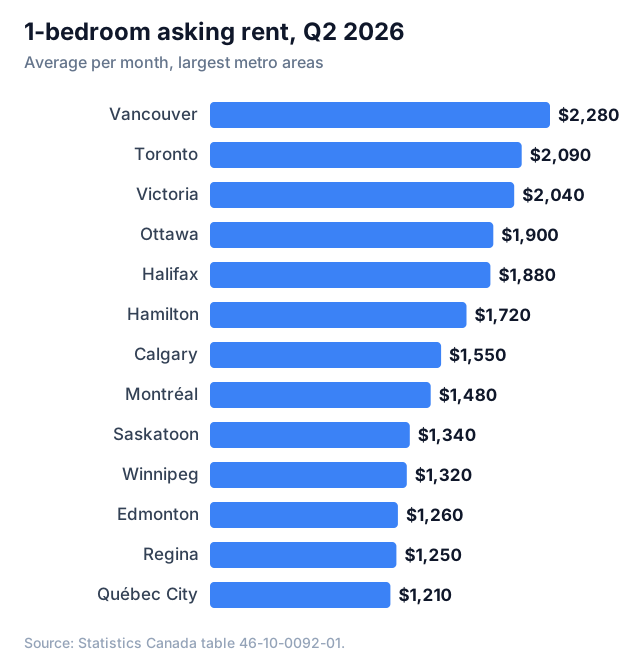
Average asking rent per month for apartments, by census metropolitan area (the city and its suburbs), April to June 2026. Ranked by one-bedroom rent.
| City | Province | 1-bedroom | 2-bedroom | 1-bed vs a year ago |
|---|---|---|---|---|
| 1. Vancouver | British Columbia | $2,280 | $3,030 | −4.2% |
| 2. Toronto | Ontario | $2,090 | $2,650 | −2.8% |
| 3. Victoria | British Columbia | $2,040 | $2,640 | −2.4% |
| 4. Ottawa | Ontario | $1,900 | $2,360 | −2.6% |
| 5. Halifax | Nova Scotia | $1,880 | $2,400 | +4.4% |
| 6. Kelowna | British Columbia | $1,880 | $2,330 | — |
| 7. Guelph | Ontario | $1,860 | $2,190 | −3.1% |
| 8. Barrie | Ontario | $1,830 | $2,100 | +1.1% |
| 9. Kitchener-Waterloo | Ontario | $1,740 | $2,120 | −4.4% |
| 10. Nanaimo | British Columbia | $1,740 | $2,080 | +4.8% |
| 11. Hamilton | Ontario | $1,720 | $2,150 | −3.9% |
| 12. Kingston | Ontario | $1,720 | $1,940 | −1.1% |
| 13. Oshawa | Ontario | $1,720 | $2,000 | +0.6% |
| 14. Belleville | Ontario | $1,650 | $1,900 | — |
| 15. Greater Sudbury | Ontario | $1,630 | $1,940 | +2.5% |
| 16. Brantford | Ontario | $1,610 | $1,890 | −2.4% |
| 17. Peterborough | Ontario | $1,600 | $1,920 | +1.9% |
| 18. Kamloops | British Columbia | $1,590 | $1,960 | +5.3% |
| 19. St. Catharines-Niagara | Ontario | $1,570 | $1,900 | +0.0% |
| 20. London | Ontario | $1,560 | $1,920 | −4.3% |
| 21. Abbotsford | British Columbia | $1,560 | $1,890 | −4.9% |
| 22. Calgary | Alberta | $1,550 | $1,890 | −6.1% |
| 23. Windsor | Ontario | $1,520 | $1,850 | +2.7% |
| 24. Montréal | Quebec | $1,480 | $1,820 | −3.3% |
| 25. Thunder Bay | Ontario | $1,470 | $1,980 | +3.5% |
| 26. Gatineau | Quebec | $1,440 | $1,700 | −3.4% |
| 27. Fredericton | New Brunswick | $1,430 | $1,670 | +5.1% |
| 28. Chilliwack | British Columbia | $1,410 | $1,760 | −5.4% |
| 29. Saskatoon | Saskatchewan | $1,340 | $1,620 | +3.9% |
| 30. Winnipeg | Manitoba | $1,320 | $1,660 | +3.9% |
| 31. Moncton | New Brunswick | $1,290 | $1,460 | −0.8% |
| 32. St. John's | Newfoundland and Labrador | $1,270 | $1,530 | — |
| 33. Lethbridge | Alberta | $1,270 | $1,480 | +0.0% |
| 34. Edmonton | Alberta | $1,260 | $1,570 | −2.3% |
| 35. Regina | Saskatchewan | $1,250 | $1,480 | +1.6% |
| 36. Saint John | New Brunswick | $1,230 | $1,530 | +1.7% |
| 37. Red Deer | Alberta | $1,230 | $1,410 | +0.0% |
| 38. Québec City | Quebec | $1,210 | $1,460 | +2.5% |
| 39. Sherbrooke | Quebec | $1,040 | $1,300 | −1.9% |
| 40. Trois-Rivières | Quebec | $970 | — | — |
| Drummondville* | Quebec | — | $1,200 | — |
| All metro areas | $1,730 | $2,130 | −2.8% |
* Statistics Canada did not publish a one-bedroom figure for this city this quarter. Charlottetown is not covered by the series, and Saguenay had no apartment figures this quarter.
Rent by province: the cities in each
Provinces from west to east, cities from most to least expensive (one-bedroom asking rent).
| Province | Cities |
|---|---|
| British Columbia | Vancouver $2,280, Victoria $2,040, Kelowna $1,880, Nanaimo $1,740, Kamloops $1,590, Abbotsford $1,560, Chilliwack $1,410 |
| Alberta | Calgary $1,550, Lethbridge $1,270, Edmonton $1,260, Red Deer $1,230 |
| Saskatchewan | Saskatoon $1,340, Regina $1,250 |
| Manitoba | Winnipeg $1,320 |
| Ontario | Toronto $2,090, Ottawa $1,900, Guelph $1,860, Barrie $1,830, Kitchener-Waterloo $1,740, Hamilton $1,720, Kingston $1,720, Oshawa $1,720, Belleville $1,650, Greater Sudbury $1,630, Brantford $1,610, Peterborough $1,600, St. Catharines-Niagara $1,570, London $1,560, Windsor $1,520, Thunder Bay $1,470 |
| Quebec | Montréal $1,480, Gatineau $1,440, Québec City $1,210, Sherbrooke $1,040, Trois-Rivières $970 |
| New Brunswick | Fredericton $1,430, Moncton $1,290, Saint John $1,230 |
| Nova Scotia | Halifax $1,880 |
| Newfoundland and Labrador | St. John's $1,270 |
The cheapest larger cities in each region: Edmonton ($1,260) in Alberta, Regina ($1,250) on the Prairies, Québec City ($1,210) in Quebec, Thunder Bay ($1,470) and Windsor ($1,520) in Ontario, and Saint John and Moncton in the Maritimes.
Rent as a share of take-home pay
One-bedroom rent divided by monthly take-home pay on a C$60,000 salary in that province (2026 income tax, CPP/QPP and EI, single employee, from our take-home pay tables). A common rule of thumb is to keep housing under about 30% of gross income, which is roughly 38–40% of take-home pay at this salary.
| City | 1-bedroom rent | Take-home / month at $60k | Share |
|---|---|---|---|
| Vancouver | $2,280 | $3,978 | 57% |
| Toronto | $2,090 | $3,945 | 53% |
| Victoria | $2,040 | $3,978 | 51% |
| Halifax | $1,880 | $3,727 | 50% |
| Ottawa | $1,900 | $3,945 | 48% |
| Kelowna | $1,880 | $3,978 | 47% |
| Guelph | $1,860 | $3,945 | 47% |
| Barrie | $1,830 | $3,945 | 46% |
| Kitchener-Waterloo | $1,740 | $3,945 | 44% |
| Nanaimo | $1,740 | $3,978 | 44% |
| Hamilton | $1,720 | $3,945 | 44% |
| Kingston | $1,720 | $3,945 | 44% |
| Oshawa | $1,720 | $3,945 | 44% |
| Belleville | $1,650 | $3,945 | 42% |
| Greater Sudbury | $1,630 | $3,945 | 41% |
| Brantford | $1,610 | $3,945 | 41% |
| Peterborough | $1,600 | $3,945 | 41% |
| Kamloops | $1,590 | $3,978 | 40% |
| St. Catharines-Niagara | $1,570 | $3,945 | 40% |
| London | $1,560 | $3,945 | 40% |
| Abbotsford | $1,560 | $3,978 | 39% |
| Calgary | $1,550 | $3,974 | 39% |
| Montréal | $1,480 | $3,796 | 39% |
| Windsor | $1,520 | $3,945 | 39% |
| Gatineau | $1,440 | $3,796 | 38% |
| Fredericton | $1,430 | $3,837 | 37% |
| Thunder Bay | $1,470 | $3,945 | 37% |
| Chilliwack | $1,410 | $3,978 | 35% |
| Winnipeg | $1,320 | $3,814 | 35% |
| Saskatoon | $1,340 | $3,877 | 35% |
| Moncton | $1,290 | $3,837 | 34% |
| St. John's | $1,270 | $3,800 | 33% |
| Regina | $1,250 | $3,877 | 32% |
| Saint John | $1,230 | $3,837 | 32% |
| Lethbridge | $1,270 | $3,974 | 32% |
| Québec City | $1,210 | $3,796 | 32% |
| Edmonton | $1,260 | $3,974 | 32% |
| Red Deer | $1,230 | $3,974 | 31% |
| Sherbrooke | $1,040 | $3,796 | 27% |
| Trois-Rivières | $970 | $3,796 | 26% |
Where rents are falling and rising
One-bedroom asking rents were lower than a year earlier in all six of the largest metro areas (Toronto, Montréal, Vancouver, Calgary, Edmonton and Ottawa) and in 18 of 36 metro areas overall. The biggest changes from Q2 2025 to Q2 2026:
- Falling most: Calgary (−6.1%), Chilliwack (−5.4%), Abbotsford (−4.9%), Kitchener-Waterloo (−4.4%), London (−4.3%).
- Rising most: Kamloops (+5.3%), Fredericton (+5.1%), Nanaimo (+4.8%), Halifax (+4.4%), Winnipeg (+3.9%).
Asking rents fall first when more units come on the market and population growth slows; rents for existing tenants usually keep rising for longer.
What this means if you are moving
- Budget with asking rent, not the average you read in the news. As a newcomer to a city you pay the advertised rent. Statistics Canada's "average paid rent" for sitting tenants is lower.
- Rent outweighs every other difference. Moving from Toronto to Edmonton saves about $9,960 a year on a one-bedroom, more than the income tax difference between any two provinces at C$100,000. For groceries the gap between provinces is a few dollars a week (grocery prices by province). For what is left after rent on a typical salary in each city, see salary by province.
- Check rent rules in the new province. Rent increase limits for existing tenants differ: Ontario and British Columbia set an annual guideline for most units, Alberta does not cap the amount but allows only one increase every 365 days.
- Plan for the move-in costs. First month's rent, a deposit where allowed, and utilities that may not be included. See the moving to another province checklist.